When central air is cooling, collected water needs a controlled path away from the equipment. In a Springdale home, that path may be overlooked until a damp spot, staining, a musty odor, or a question about past moisture appears near the air handler. Asking where condensate goes focuses a concern on visible conditions and the area’s history.
Condensate needs a visible route
Cooling equipment produces water as it cools warm air. EPA guidance on HVAC systems says condensate pans remove this water and can become reservoirs for mold and bacteria if improperly installed or maintained. EPA also recommends clean drip pans and unobstructed, flowing drain lines.
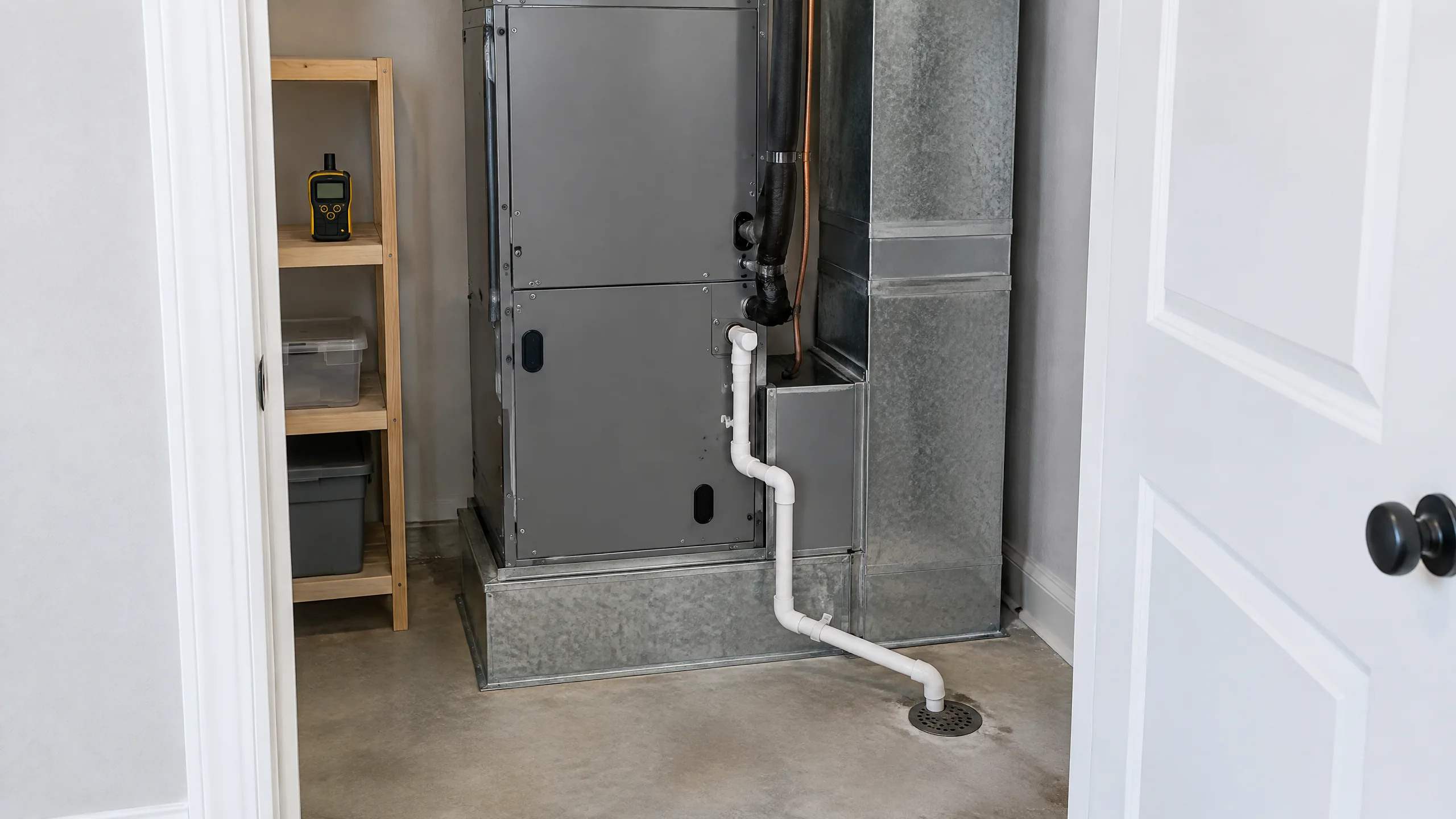
A visible drain pipe, pan, floor drain, or exterior termination can show how a setup is intended to manage water. When a route disappears behind finishes or cannot be followed, do not fill in the gaps with assumptions. Ask what is visible, where it appears to lead, and whether nearby materials show evidence of dampness.
Conditions around the equipment matter
A moisture question is broader than one pipe. Accessible observations may include water marks below the unit, corrosion, damp insulation, staining nearby, standing water, or an odor that returns when the area is closed. A stain may be older, and a dry surface at one visit does not establish that water was never present.
Record a short history
Before discussing mold testing, note when the moisture, odor, or visible change was first noticed and whether cooling was running. Record known HVAC drainage service and which nearby materials were affected. This turns a broad concern into a clearer property question.
- Was the change seen during cooling operation or at another time?
- Is there a known leak, overflow, repair, or alteration near the equipment?
- Does the condition seem limited to the utility area or extend elsewhere?
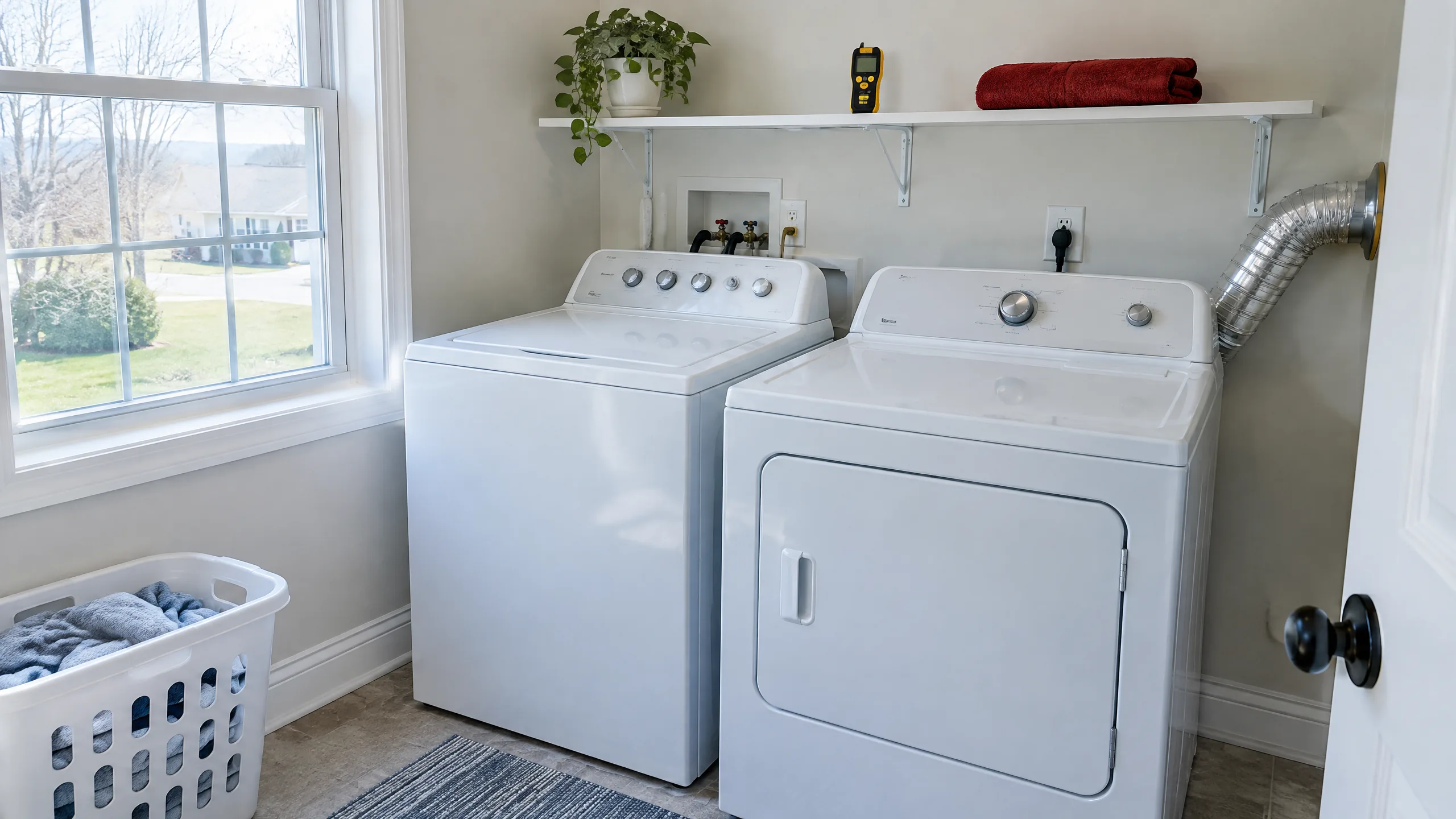
Those notes can separate an air-conditioning concern from other moisture paths. For example, laundry-room moisture questions may involve plumbing, drainage, condensation, or dryer exhaust rather than an air handler.
Seasonal operation has limits
Condensate is tied to cooling operation, so a system observed outside the cooling season may not show usual drainage conditions. A dry pan or line then does not prove performance during a humid cooling cycle. Water near equipment deserves follow-up without assuming condensate is the source.
Recent maintenance, weather, thermostat settings, and occupancy can change the scene. For a vacant property, utility status and authorized operation should be settled before the appointment; this guide to utilities before a vacant-home inspection explains why. It is an observation limit, not a performance prediction.
Sampling has a specific purpose
Visible drainage details and a moisture history help define whether sampling would add useful information. Mold testing is a snapshot of conditions at the place and time sampled; it does not repair a drain, locate every concealed water source, or certify a home is mold-free. EPA identifies moisture control as key to mold control and notes that no federal limits are set for indoor mold or spores.
When visible growth is present, EPA says sampling is usually unnecessary because the moisture problem and cleanup still need attention. When the question is less obvious, such as a recurring odor near an air handler or documentation after a known event, the setting and history help put a result into context. Read more about when mold testing may be useful before treating a single sample as a complete answer.
Separate drainage work from testing
If an accessible condensate component appears to leak, clog, disconnect, or otherwise fail to manage water, an HVAC contractor should evaluate drainage and needed service. Correcting the moisture source and drying affected materials are essential; a test is not a cure or guarantee. EPA advises drying wet or damp areas promptly, generally within 24 to 48 hours.
Five Star Home Inspections offers mold testing for property questions in Springdale and the Greater Cincinnati area. A related look at bathroom exhaust routing shows another reason to trace moisture outward rather than assume it is controlled. If you have a known event, a visible condition, or a focused testing question, schedule an inspection and share the location, timing, and available history.