A laundry room can collect several kinds of moisture evidence: a mark below a supply hose, dampness near a drain, or droplets on a cold pipe. Those clues do not all point to the same cause. For an Erlanger property question, start by separating what is visible today from what is known about the room’s history.
Begin with the location and timing
Pinpoint the exact area that raises concern. Is it below the washer, around the utility sink, beside an exterior wall, behind the dryer, or at a ceiling below the room?
Then note when it appears. Moisture that follows a wash cycle calls for different questions than dampness that returns during humid weather or after a cold-water line runs.
Separate plumbing leaks from condensation
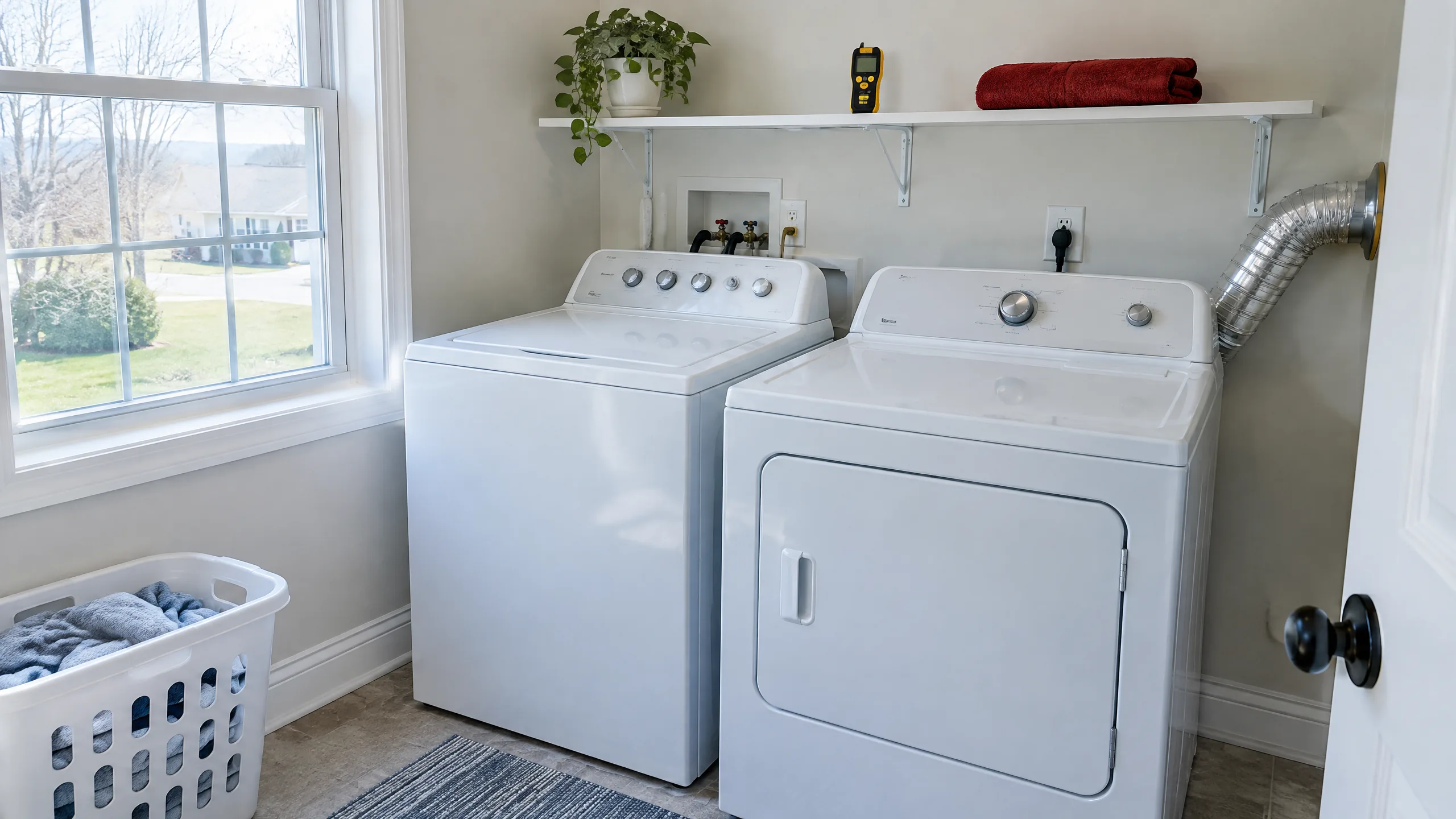
Accessible supply connections, appliance hoses, drain piping, valves, and the floor around them can provide clues. A fresh drip, active dampness, corrosion, or a localized mark may focus the next inquiry, while a dry area during an observation does not rule out an intermittent condition.
Condensation can form when humid air meets a cold surface, such as an uninsulated pipe. The EPA advises drying collected moisture promptly and reducing the moisture source; it also notes that indoor humidity below 60 percent, ideally 30 to 50 percent, can help limit condensation. EPA moisture-control guidance is a useful reference.
Details to record before testing
- Whether moisture appears during, after, or between laundry cycles
- Known hose, plumbing, appliance, or exterior-wall repairs
- Whether a nearby pipe feels wet or only shows old staining
- Any musty odor and where it is most noticeable
Follow the dryer exhaust path
A dryer connection deserves its own observations. Look for a connected metal transition duct where accessible, obvious crushing or disconnection, and a visible route continuing toward an exterior discharge. Lint at the appliance connection does not identify a moisture source or show where the exhaust ultimately terminates. For dryer-vent context, read why clean dryer vents.
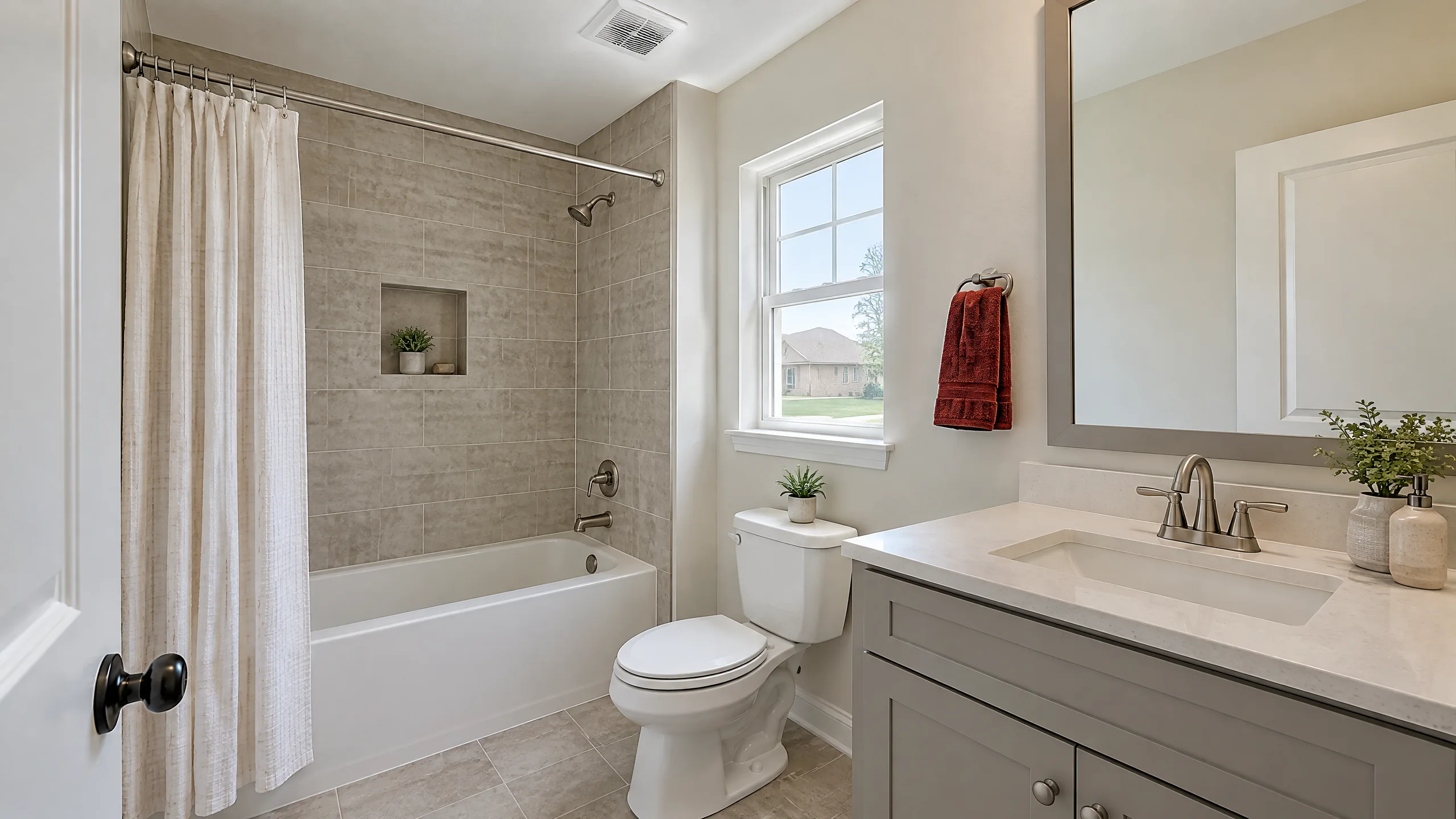
Dryer-related questions can overlap with other ventilation clues without being interchangeable. If the question moves to a bathroom fan route, see our related article on following bathroom exhaust beyond the fan. The aim is to understand the particular appliance or fixture involved rather than assume every damp room has one explanation.
Understand what a sample can show
Mold testing can document conditions in a particular location at a particular time when that information fits the property question. It is useful alongside visible conditions, moisture history, and a clear reason for collecting a sample. Results do not locate a leak, repair a dryer connection, or certify an entire home as mold-free.
EPA says routine sampling is generally unnecessary when visible mold growth is present and that federal limits for mold or mold spores have not been set. Its mold testing guidance explains that sampling needs an appropriate protocol and interpretation. A dark mark or discoloration should not be treated as a species diagnosis based on appearance alone.
Address the water source first
Testing is an assessment tool, not the correction for an active moisture condition. If a plumbing component is leaking, a qualified repair professional can evaluate it; if condensation is recurring, the next step may involve the moisture source, surface temperature, or airflow. Drying affected materials and correcting the contributing condition matter because moisture control is central to limiting indoor growth.
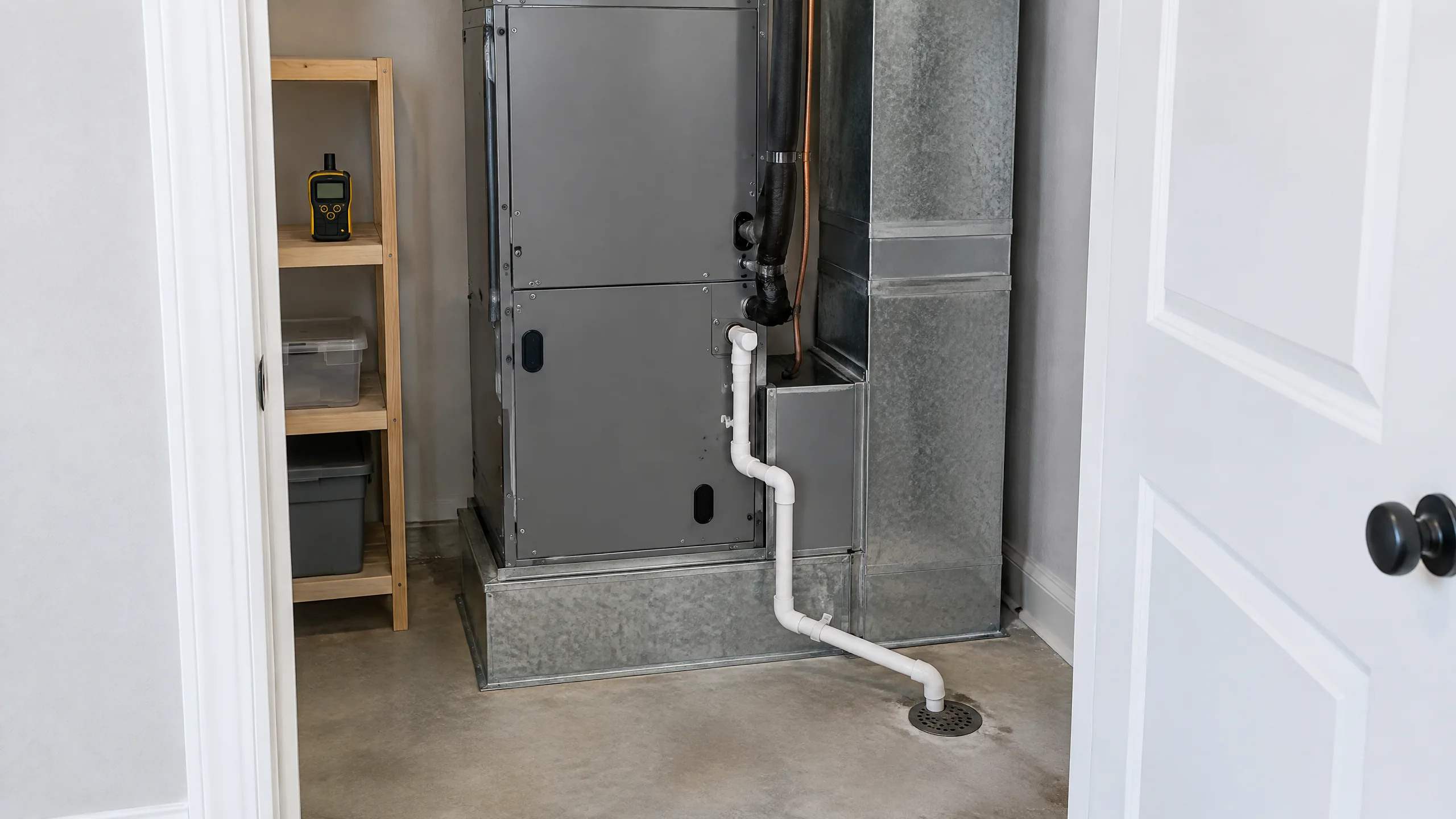
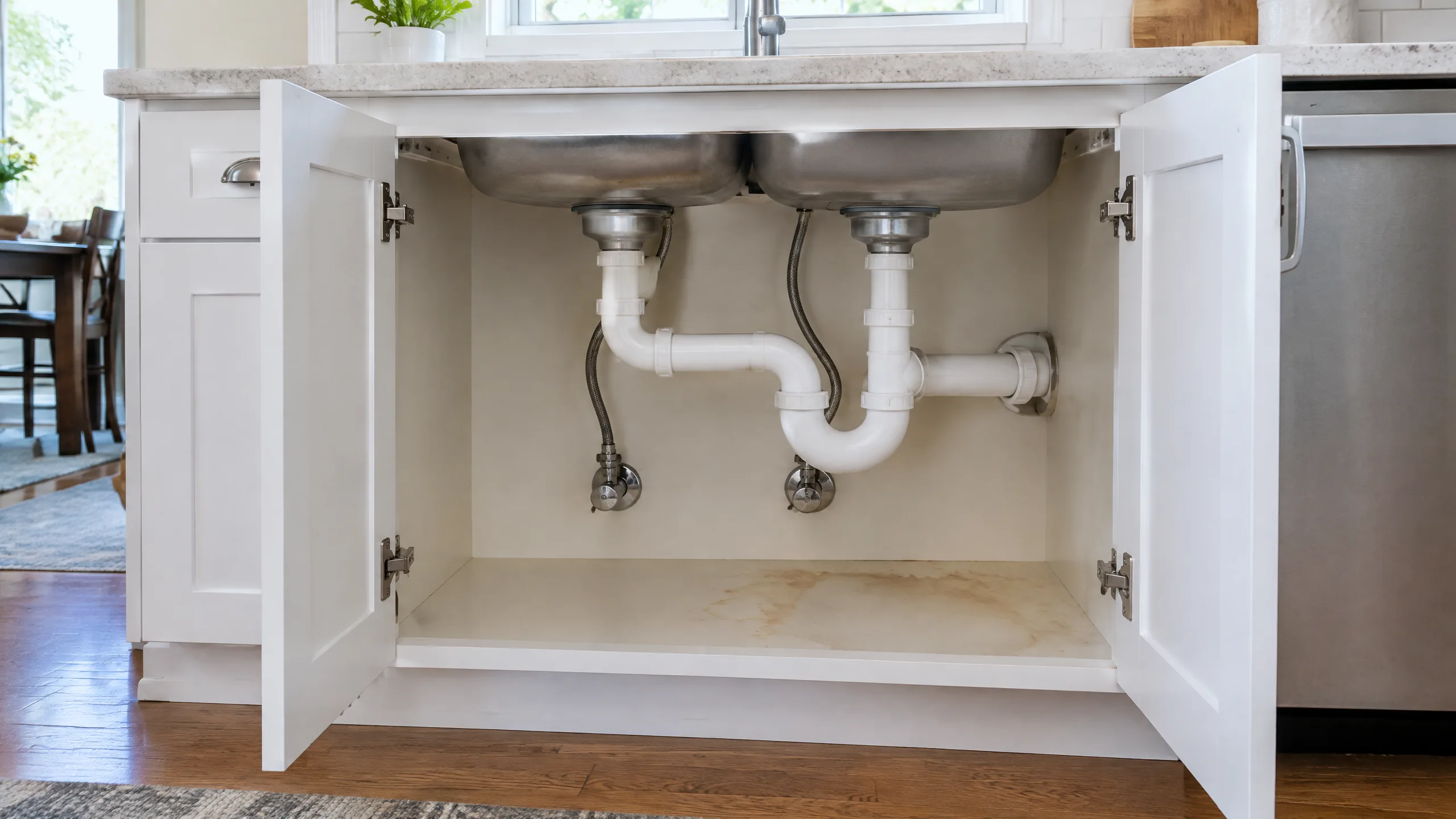
The same source-first approach helps keep separate questions organized. A laundry-room concern may sit near an HVAC drain, so our piece on where air-conditioning condensate goes may be relevant. For a visibly damp cabinet or utility sink area, compare the observations with evidence under sinks.
Prepare a focused property question
Before arranging an appointment, identify the room, suspected moisture pattern, known water event, and what you want clarified. Keeping access clear to the laundry appliances and visible piping can make the on-site conversation more productive. Do not paint over or simply cover a damp area before the underlying condition has been considered.
Five Star Home Inspections provides mold testing for moisture-related property questions in Northern Kentucky and Greater Cincinnati. If the goal is context for a laundry-room concern in Erlanger, schedule an inspection and describe the location and history so the discussion can begin with the right question.