
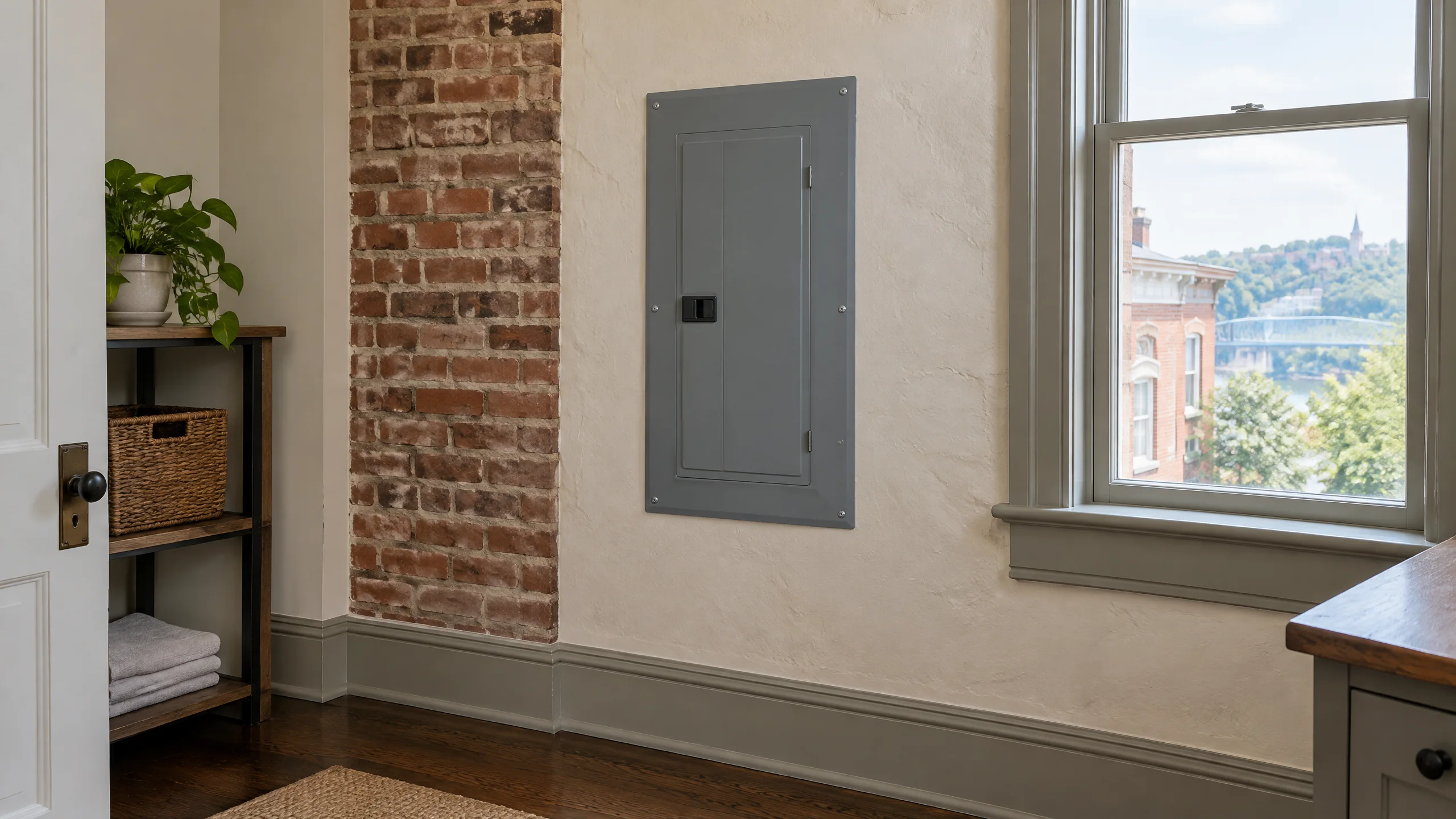
A renovated kitchen, newer light fixtures, and a tidy breaker panel can make a home feel electrically up to date. But improvements often happen in stages. One room may have been remodeled while wiring elsewhere remains older, and a clean-looking panel does not by itself establish the condition of every circuit. In Covington, as with any community, the useful question is not whether a house looks old or new. It is what can be observed at this particular property and what deserves a closer look.
A renovated room is only one part of the story
Electrical work may occur at different times for different reasons: a room renovation, a service upgrade, replacement of a failed component, or an owner's attempt to address a specific need. Visible finishes and fixtures can offer clues, but they rarely document the full route or age of wiring hidden behind walls. A recent-looking receptacle or light switch is not proof that the wiring serving it was replaced at the same time.
Ask for permits, invoices, or contractor paperwork to understand past work. Records can show what a project was intended to cover, but do not replace observing the current system. Missing paperwork alone does not establish a defect. The report describes observed conditions, not a complete construction history or certification of past work.
What a visual inspection can and cannot tell you
Five Star Home Inspections Inc. describes its standard home inspection as a review of visible, accessible systems and components, including electrical components when present and safely accessible. Depending on the property and access, observations may include the panel exterior and visible conditions, accessible wiring, and a representative sample of outlets, switches, or fixtures. The actual scope can be affected by stored belongings, closed areas, unsafe conditions, or systems that are not operating.
A general home inspection is not a technically exhaustive electrical evaluation. It does not expose hidden wiring, trace every branch circuit, or necessarily open a panel cover. InterNACHI's Standards of Practice describe a visual, non-invasive inspection and exclude removing panelboard covers or determining concealed conditions. The inspection can note a visible concern; it cannot certify every connection.
Take panel and outlet clues seriously, without guessing
Useful observations include a panel opening without a cover plate, visible damage, signs of unusual heat, loose or damaged receptacles, or an outlet that does not operate as expected during the inspection. A circuit breaker that trips repeatedly, lights that flicker, buzzing, a burning odor, or hot or discolored outlet covers are also worth taking seriously. The U.S. Consumer Product Safety Commission lists these among warning signs of potential electrical hazards and advises that finding and repairing electrical defects are jobs for qualified professionals.
One clue does not automatically reveal its cause. A breaker trip may have several explanations, and an observed receptacle issue does not tell you what is happening throughout the circuit. Avoid removing a panel cover, probing wiring, or attempting repairs on energized equipment. If there is an active burning smell, sparking, or another immediate danger, keep clear and contact the appropriate emergency or electrical professional rather than experimenting.
When to bring in an electrician
Specialist follow-up is useful when the report identifies a safety concern, when warning signs persist, or when you need answers beyond a visual inspection's scope. A qualified electrician can evaluate wiring and connections, determine the cause of a problem, and recommend work. That is different from a home inspector's role: the inspector records what was observed and may recommend further evaluation, while the electrician can investigate the system in greater depth.
Share the inspection report and ask the electrician to assess the noted item and explain any recommended corrections. If you are considering a renovation or adding a substantial electrical load, discuss that work directly with the electrician. A general inspection does not determine suitability for a future project.
Use findings to focus your next questions
Mixed-age work is not automatically a defect, and newer components do not resolve questions about concealed wiring. Treat the report as a snapshot of conditions visible on the inspection date. Compare it with disclosures and repair records, then identify questions for a specialist. The inspection does not determine code compliance, repair costs, or whether you should buy the property.
For an overview of the company's visual inspection scope, visit Five Star's home inspection service. You may also find it useful to read about how an addition meets the original house and turning report findings into focused follow-up. To request a Covington-area inspection, use the online scheduling page or call Five Star at 859-935-1560.