A slab home is not automatically a radon-free home
A slab-on-grade home still rests on soil, and radon is a naturally occurring gas that can move indoors. The U.S. Environmental Protection Agency says any home can have a radon problem, including homes with or without basements; radon typically enters through foundation cracks and other holes. EPA’s home buyer and seller guide explains why foundation style alone cannot answer the question.
On a slab, potential openings include cracks, joints, or gaps around pipes. Their presence does not establish a pathway or reveal indoor concentration. No below-grade living space is not itself a measurement. Radon has no useful visual or odor cue, so testing—not appearance—is how you learn what is present during a given period.
A test answers a property-specific question
Readings can differ between similar or nearby homes. A neighbor’s result, the house’s age, or its slab cannot stand in for a measurement at the property you are considering. A regional map is not a prediction for one address. The useful question is what a properly conducted test measures in this home, under its test conditions.
For buyers, the result adds due-diligence information. It does not replace a general inspection, identify the cause, specify mitigation design, or guarantee the same concentration in every season. If there is no existing result, arrange testing early enough to understand the test window and transaction deadlines.
Choose the test around your timing and purpose
In a purchase, a short-term test may be practical because parties are working within a limited inspection period. EPA’s buyer-and-seller guidance describes short-term devices that remain in a home from two to 90 days, depending on device, and transaction approaches designed to produce information sooner. A longer test—more than 90 days—is more likely to represent a home’s year-round average. Follow the tester’s protocol for either choice.
A test is a sample, not a permanent certificate for a building. If coordinating several due-diligence services, read our guide to coordinating a home inspection with other tests. Buyers considering a finished below-grade space can also read planning a radon test around a finished basement for related preparation considerations.
Help the measurement reflect the planned conditions
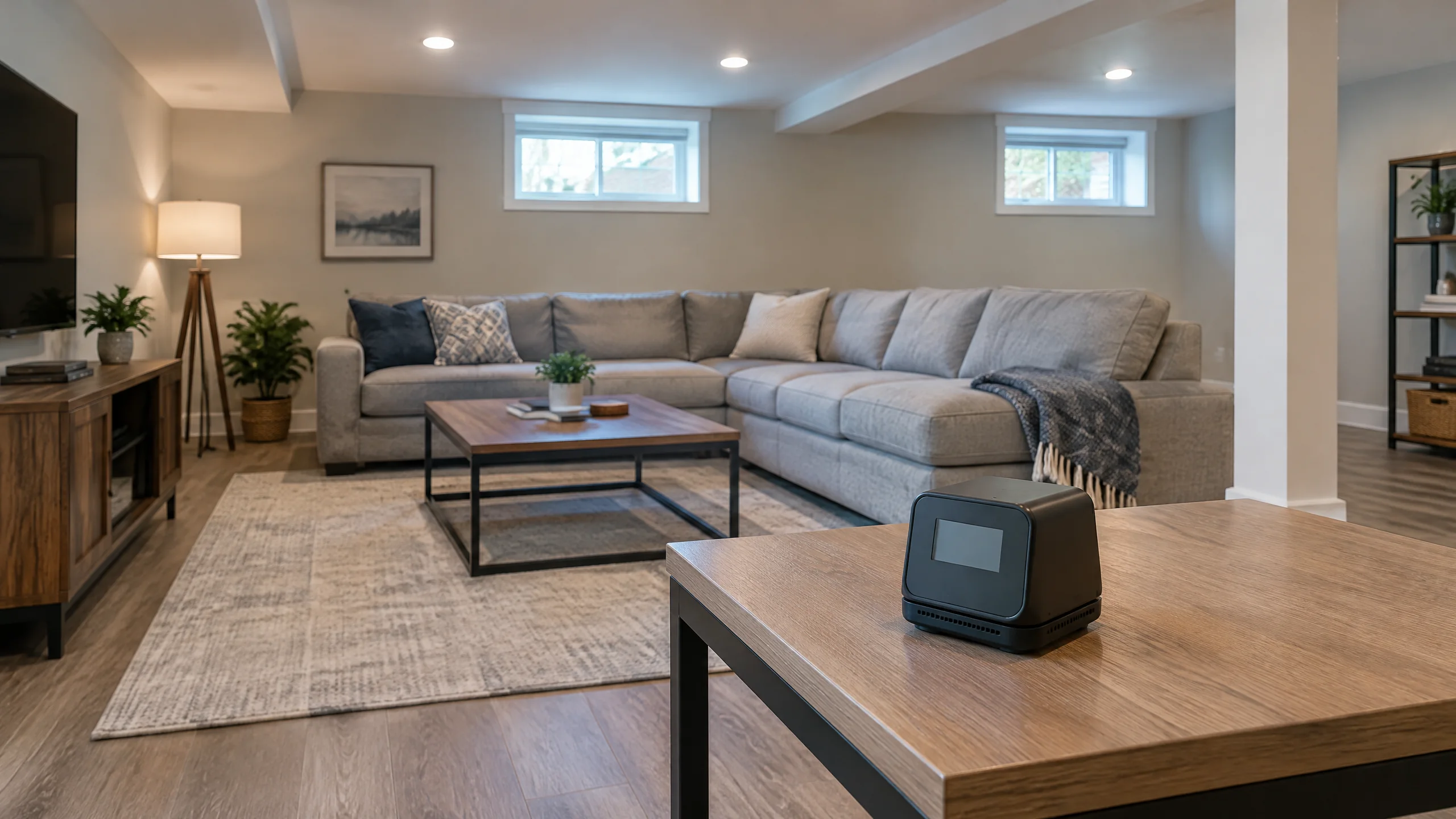
Before the appointment, confirm where the device will be placed, how long it must remain, and what occupants should do while it runs. Location depends on the protocol and question, not simply on the slab foundation. Keep activity from disturbing it, and do not move or unplug equipment unless the tester says to.
For a transaction, ask the provider for instructions in advance. Ventilation, openings, and entry can affect test conditions. Do not change home use to seek a ‘better’ result; tell the tester if the setup is disrupted. Clear instructions help everyone understand what the measurement represents.
Read the result as a starting point, not a diagnosis
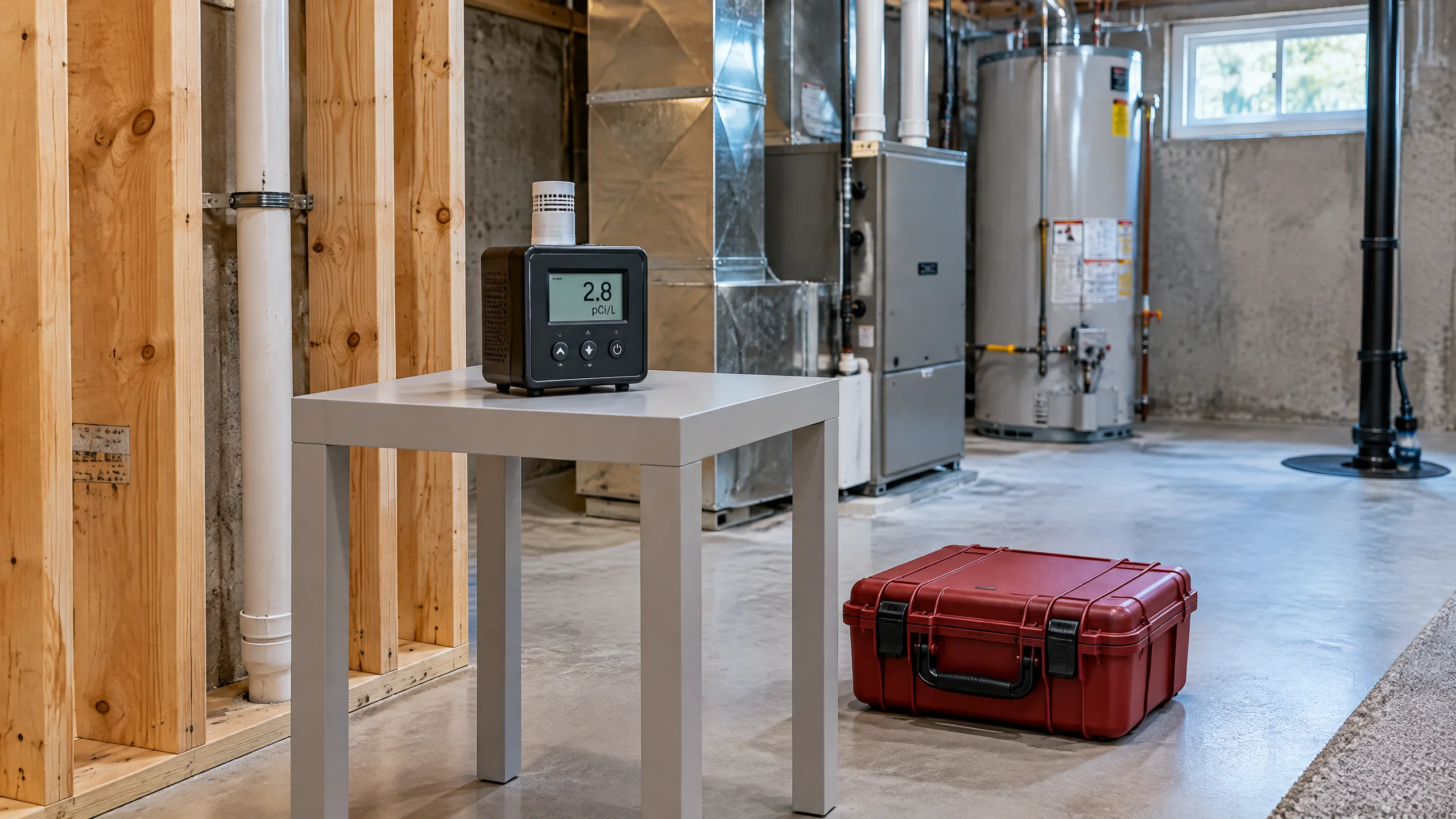
Radon is measured in picocuries per liter of air, written pCi/L. EPA recommends fixing a home when a long-term result or the average of transaction tests is at least 4 pCi/L. A lower result does not mean no radon is present, and one short-term reading does not describe every day or season. Review the report and test type before drawing conclusions.
For an elevated or uncertain result, ask qualified radon professionals about follow-up and mitigation. A measurement is not a repair plan or mitigation design. In a purchase, discuss next steps with your real-estate professional and consider your agreement and timetable. For more on handling findings, see turning report findings into focused follow-up.
Arrange radon testing for a Burlington property
Five Star Home Inspections offers radon testing in its Northern Kentucky and Greater Cincinnati service area. The company describes it as a separate measurement service that can be planned during an inspection period or requested separately; tell the team early if timing is tied to a deadline. Learn about the company’s radon testing service and its scope.
A no-basement layout is not a reason to rule testing out, but it does not predict an elevated reading either. A measurement is how you learn about the tested property and period. To begin coordinating, request an inspection or radon testing with property details, preferred timing, and any transaction deadline. Requests are reviewed and coordinated; submitting one does not confirm an appointment.