Remodeling changes the walking path
Remodeling can make a Hamilton home feel more connected, but a staircase is more than a visual bridge between rooms. New flooring, refinished trim, or an opened-up wall can change small details underfoot and alongside the route. During a home inspection, those visible connections deserve a deliberate look rather than a quick pass on the way to another room.
Follow the transition at each end
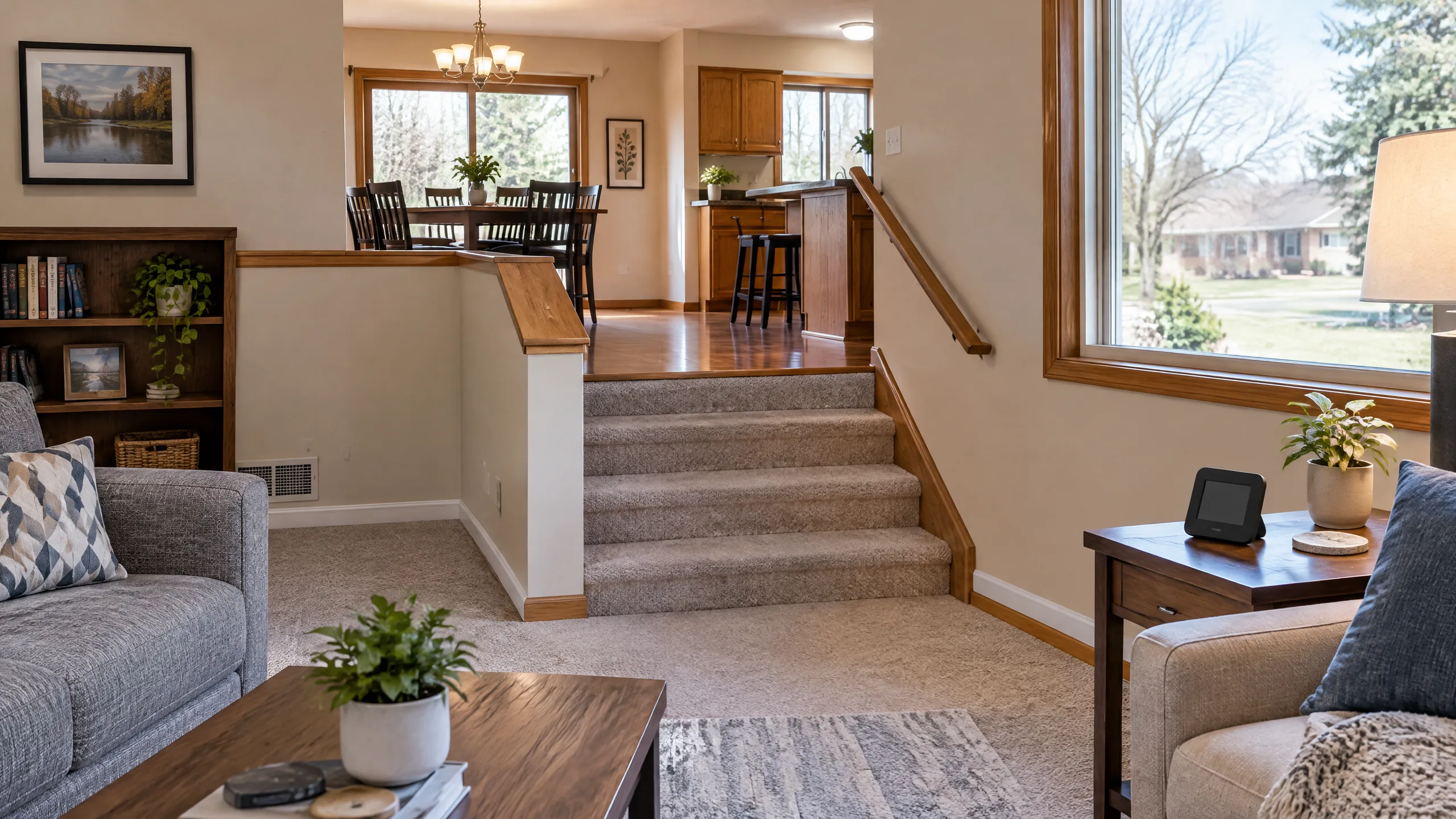
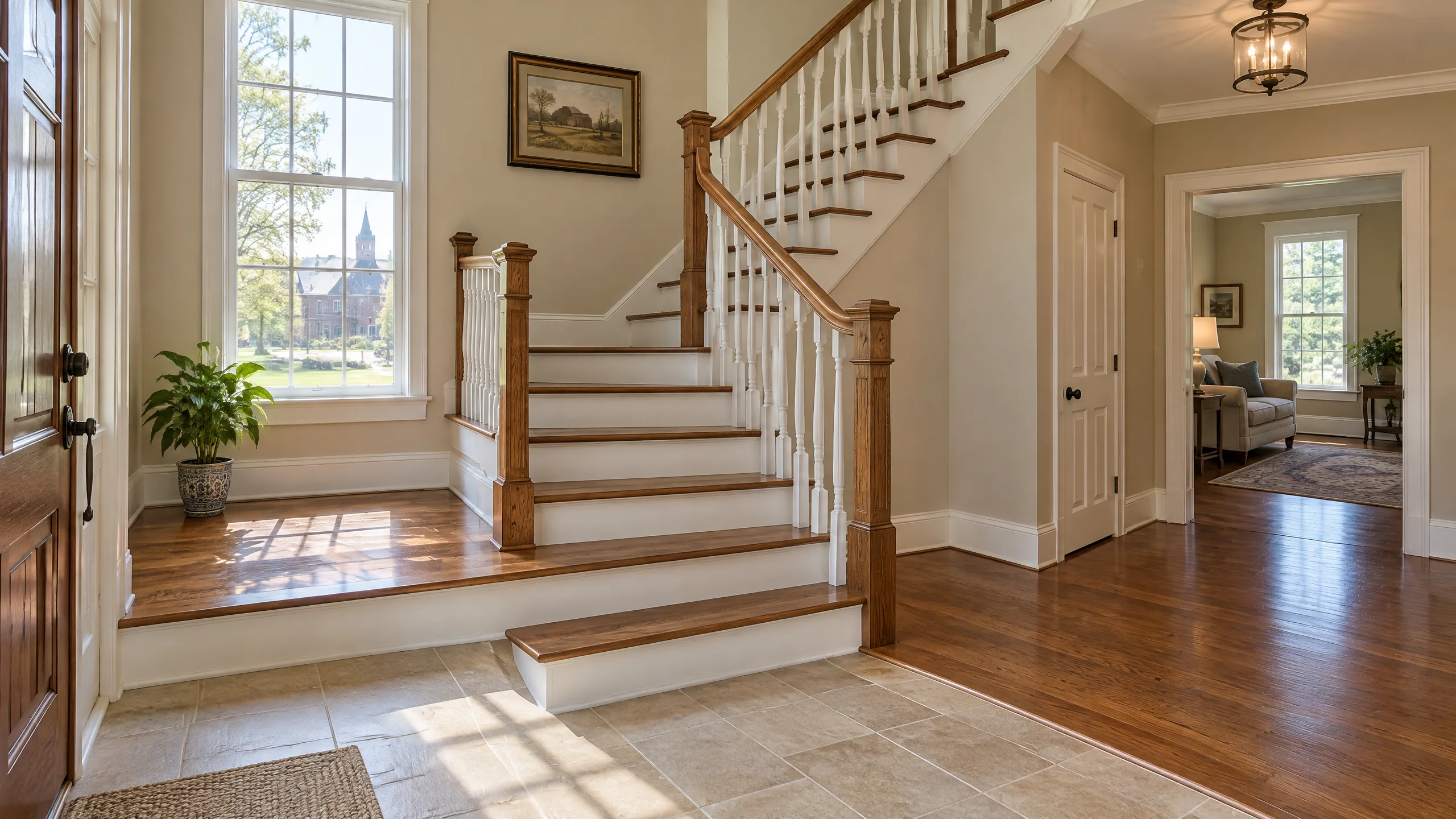
At the base or top of a stair, a hardwood-to-tile change, lifted edge, loose trim piece, or abrupt surface difference can affect the visible route. An inspector can note conspicuous conditions such as uneven, worn, loose, or poorly supported treads; InterNACHI’s stairway guidance identifies these as examples to assess. A transition is especially worth noting when it sits directly where someone steps off a stair or begins a flight.
That does not make every change in color or material a defect. A threshold, stair nosing, or transition strip may be ordinary, and a visual inspection does not require removing flooring or a covering to see what lies below. The report should distinguish the observed condition from assumptions about concealed construction.
Look at rails and landings together
Remodeling can draw attention to a landing, a new wall opening, or a freshly painted rail, but the connection matters as much as the finish. Visible items worth considering include an apparently loose, incomplete, damaged, or interrupted handrail; a landing surface that seems uneven, slippery, or obstructed; and trim or flooring details that interrupt a clear route. The purpose is to understand observable conditions, not to judge décor.
A visible view has limits
Accessible surfaces can be observed, but a standard home inspection is not a code-compliance certification or an engineering assessment. Five Star’s home inspection service is a visual review of visible, accessible components and conditions at the appointment; it cannot reveal conditions behind finishes or underneath floor coverings. InterNACHI’s Standards of Practice lists stairs, steps, landings, stairways, ramps, railings, guards, and handrails among the items an inspector inspects.
Use recent work as context
New flooring or a rebuilt landing may be a thoughtful improvement, but an installation date alone does not establish performance. Ask the seller for available invoices, product information, permits if any, and before-and-after photos. Those records can clarify what was changed without replacing an evaluation.
If the work affects a question important to your property decision, a qualified contractor or other appropriate specialist can provide diagnosis or repair advice beyond a visual inspection. When access allows, nearby wall surfaces, trim, and adjoining spaces may offer visible context. They cannot confirm hidden attachment, framing, or past construction methods.
Bring specific stair questions
Before the appointment, walk the route from the main level to bedrooms, a lower level, or an entry and write down what caught your eye. Mention a flooring change, repaired wall near a rail, uneven-looking landing, or step that feels different in use. Five Star can then consider visible, safely accessible portions of that area.
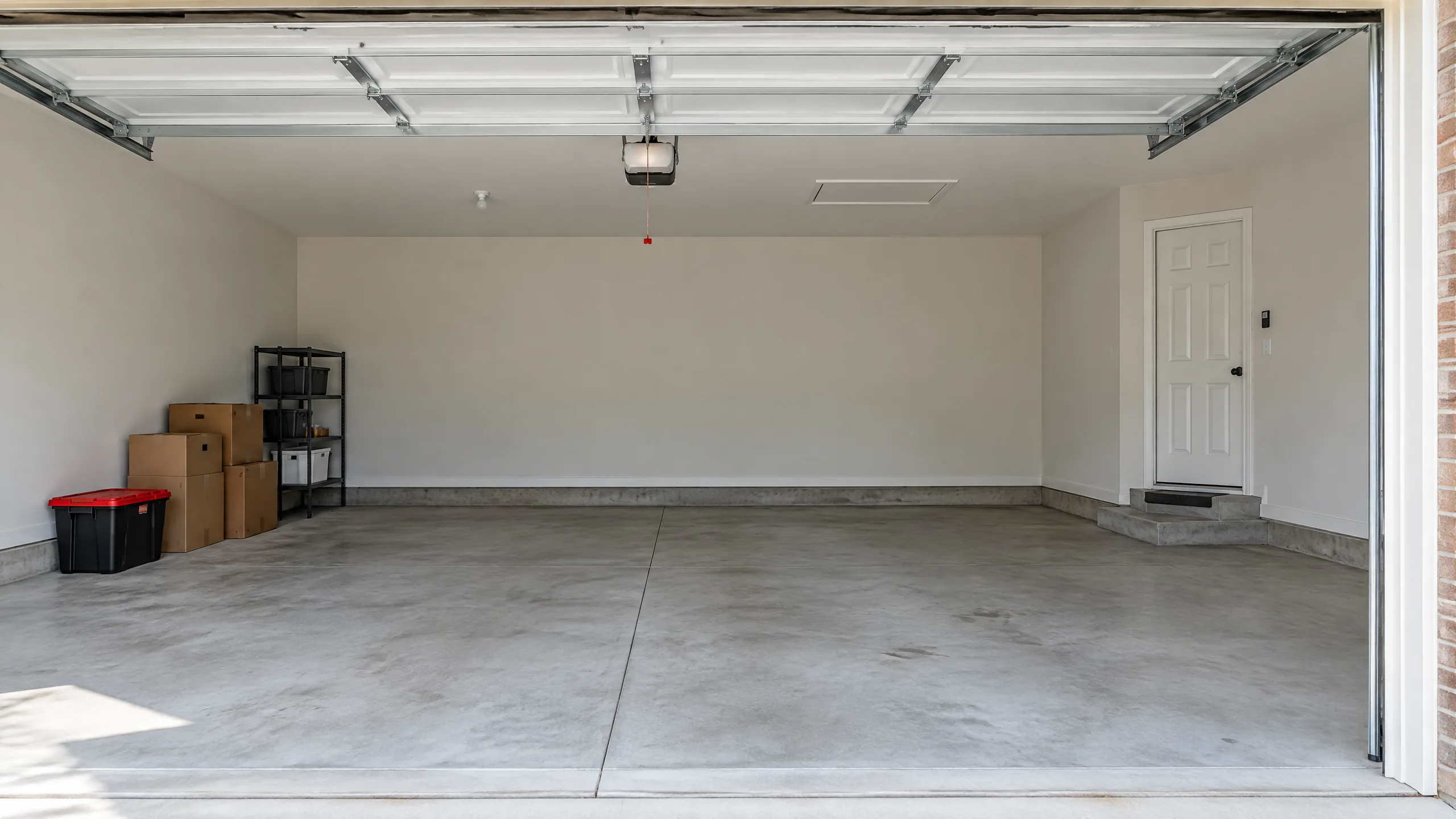
Clear access supports a more useful view, so note rugs, storage, or furnishings that obscure the route. If a stairway connects with an attached garage, the related article on the attached garage connection explains why that doorway and nearby openings deserve their own visual review. Keep the stair question separate from the larger transaction decision; our guide to property questions and transaction decisions can help frame the next conversation.
Turn observations into next questions
An inspection note is a starting point for understanding the property, not a prediction or a repair scope. If the report identifies a condition needing further evaluation, the existing article After the Inspection: Turning Report Findings Into Focused Follow-Up explains how a focused follow-up can make the next question more productive. Use the observation with disclosures, available records, and advice from the appropriate trade.
For a Hamilton property with remodeled stairs or a changed floor transition, request an inspection online and share the concern upfront. Reviewing the visible route in context can help you understand what is apparent on inspection day and where more information may be useful.