When you look at a house, it is easy to focus on shingles and miss where the rain goes next. A roof sheds a large volume of water; gutters collect it, downspouts carry it down, and the ground or a drain should move it away from the building.
Follow the water route from eave to yard
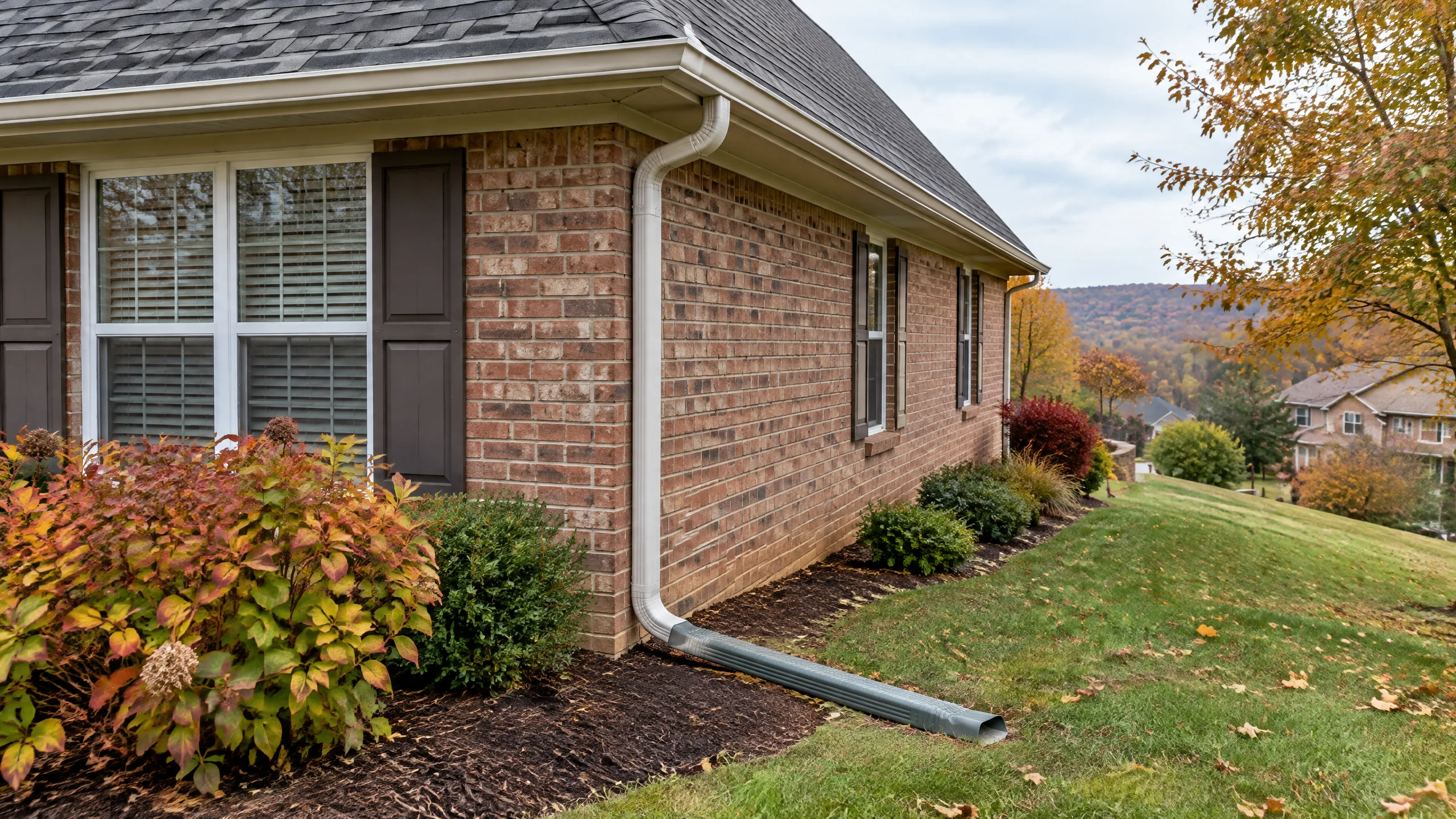
Start with the roof edge and look for a continuous path: gutter channel, outlet, downspout, discharge point, then ground that carries water away rather than back toward the house. Notice whether an elbow, extension, splash block, or drain appears to be directing runoff.
The U.S. Department of Energy’s Building America Solution Center explains that gutters and downspouts are intended to direct rainwater down and away, reducing saturation of soil around the foundation; its guidance describes discharge and grading options, not a one-size-fits-all design for every lot. Read the federal Building America guidance on gutters and downspouts when considering the route as a whole.
Look for clues, not a diagnosis
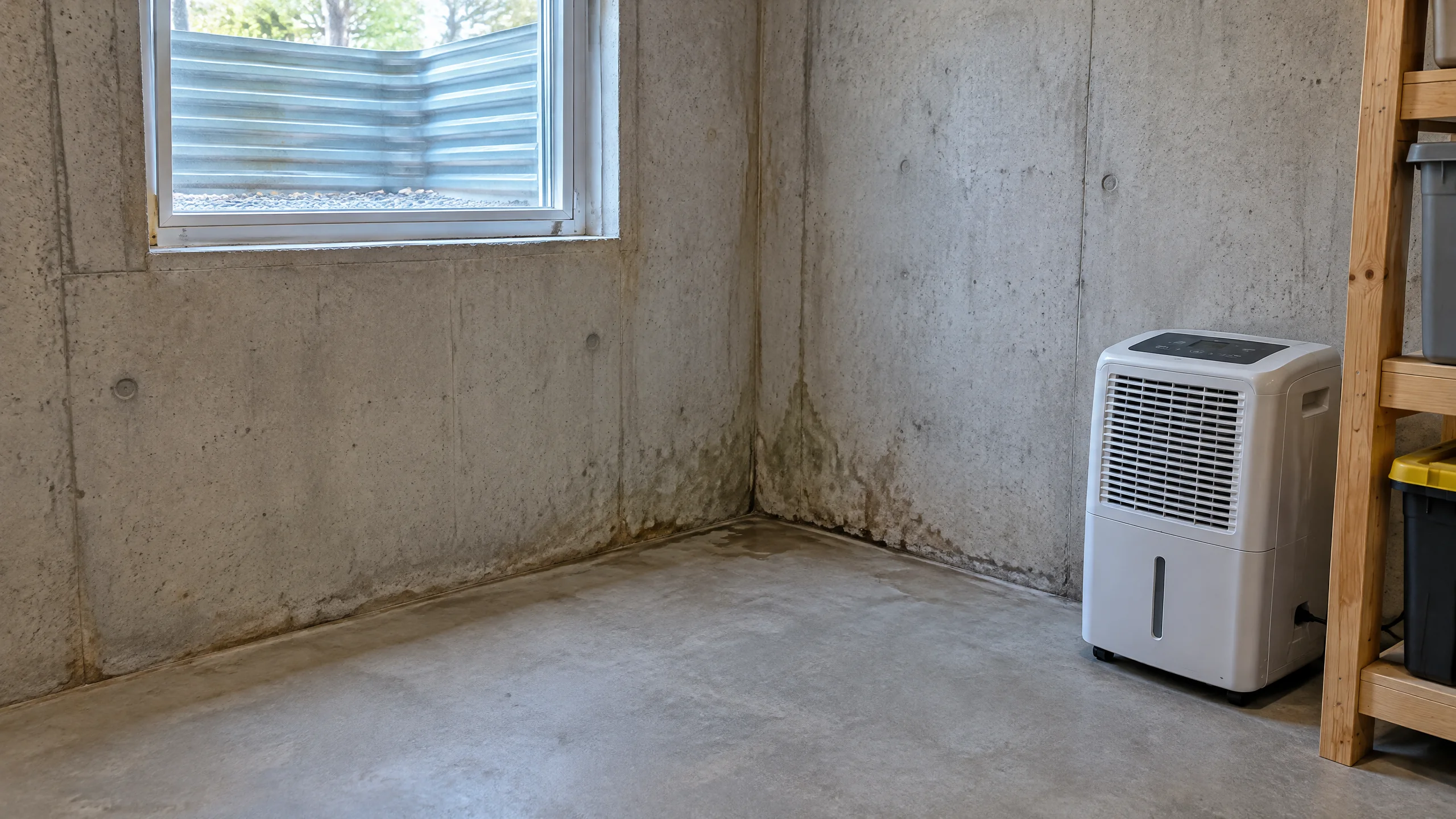
During a home inspection, useful observations may include a loose or sagging gutter, a disconnected downspout, visible overflow staining, washed-out soil, mulch or gravel displaced below an outlet, or a low area where water may collect. At the foundation, note visible staining, dampness, or deterioration if present and accessible. Inside, a basement or crawlspace may show a moisture mark that is worth comparing with the exterior drainage pattern.
These clues are pieces of context, not proof that one caused another. A stain can be old; a recent rain may reveal a pattern that dry weather does not. Water can also come from plumbing, a higher part of the site, or another source. The inspection reports visible conditions and limitations at the time of the visit; it cannot see underground piping or confirm the history of a wet area. A drainage contractor or other qualified specialist can evaluate design and recommend repairs where needed.
Check the ground around each discharge
Follow the downspout outlet with your eyes. Does the visible surface fall away from the house, or does it flatten and dip back toward the foundation? Look for soil piled against siding, settled beds, hard surfaces that channel runoff toward a wall, or an extension that has shifted out of place.
Do not assume that adding more fill, digging a trench, or connecting a pipe is a simple fix. The right approach depends on grade, soil, buried utilities, local drainage rules, and where the water will discharge. Avoid changing drainage in a way that redirects runoff onto adjacent property. If the route is unclear or water repeatedly collects, document the location and ask an appropriately qualified drainage professional to assess it.
Access, weather, and safety shape what can be seen
A standard visual inspection is limited to components that are visible and safely accessible. The inspector may be able to view roof edges, gutters, downspouts, and ground conditions from accessible areas, but access method and roof configuration matter.
Do not climb onto a roof or ladder to recreate an inspection view.
Use the findings to plan focused follow-up
Keep the observation specific: which roof edge or downspout, what condition, where runoff appears to go, and whether any interior moisture evidence is nearby.
For related perspective, read how inspection findings can clarify seller repair records, how to approach recurring basement moisture, and how to plan focused specialist follow-up. Each topic addresses a different question; none substitutes for evaluating the conditions and access at the property in front of you.
Five Star Home Inspections Inc. offers visual whole-home inspections of visible, accessible components, with the scope affected by access, weather, and safety. Learn more about home inspections in Northern Kentucky and Greater Cincinnati. For a property in Edgewood, KY, request an inspection appointment or call 859-935-1560.